DESTINATIONS
Laikipia, land of conservation

Laikipia is sometimes overlooked in favour of the Masai Mara and its famous predator sightings. But its magic lies elsewhere: in rare, intimate moments rather than sheer numbers. Few places offer the chance of a quiet sighting of a striped hyena at night, a guided walk in search of signs of black rhino, or the dream of spotting an elusive melanistic leopard.
Laikipia’s conservancies also offer ways to explore that are often restricted in national parks: walking safaris, where you feel the ground and the bush around you, and night drives, when the landscape comes alive in a different way.
The Equator crosses Laikipia. Near Nanyuki, you can stand with one foot in each hemisphere.
Look for northern Kenya’s distinctive five: Grévy’s Zebra, Reticulated Giraffe, Beisa Oryx, Somali Ostrich and Gerenuk.
Depending on the conservancy, you can explore on foot, on horseback, by camel or after dark.
Home to more than half of Kenya’s black rhinos, Laikipia is one of Africa’s most important landscapes for rhino conservation.
One of Kenya’s most rewarding places to look for African wild dogs, Grévy’s zebras, reticulated giraffes and leopards.
More than 2,000 elephants roam across the wider Laikipia ecosystem.

Laikipia is a landscape of private and community conservancies, rather than a single national park.
More than 20 conservancies work to protect wildlife while supporting local livelihoods.

Here, conservation is part of everyday life: people, livestock and wildlife share the same landscape.
Laikipia lies on a vast plateau between Mount Kenya and the Great Rift Valley.
Wild, open and uncrowded. A landscape with room for wildlife and for you to breathe.
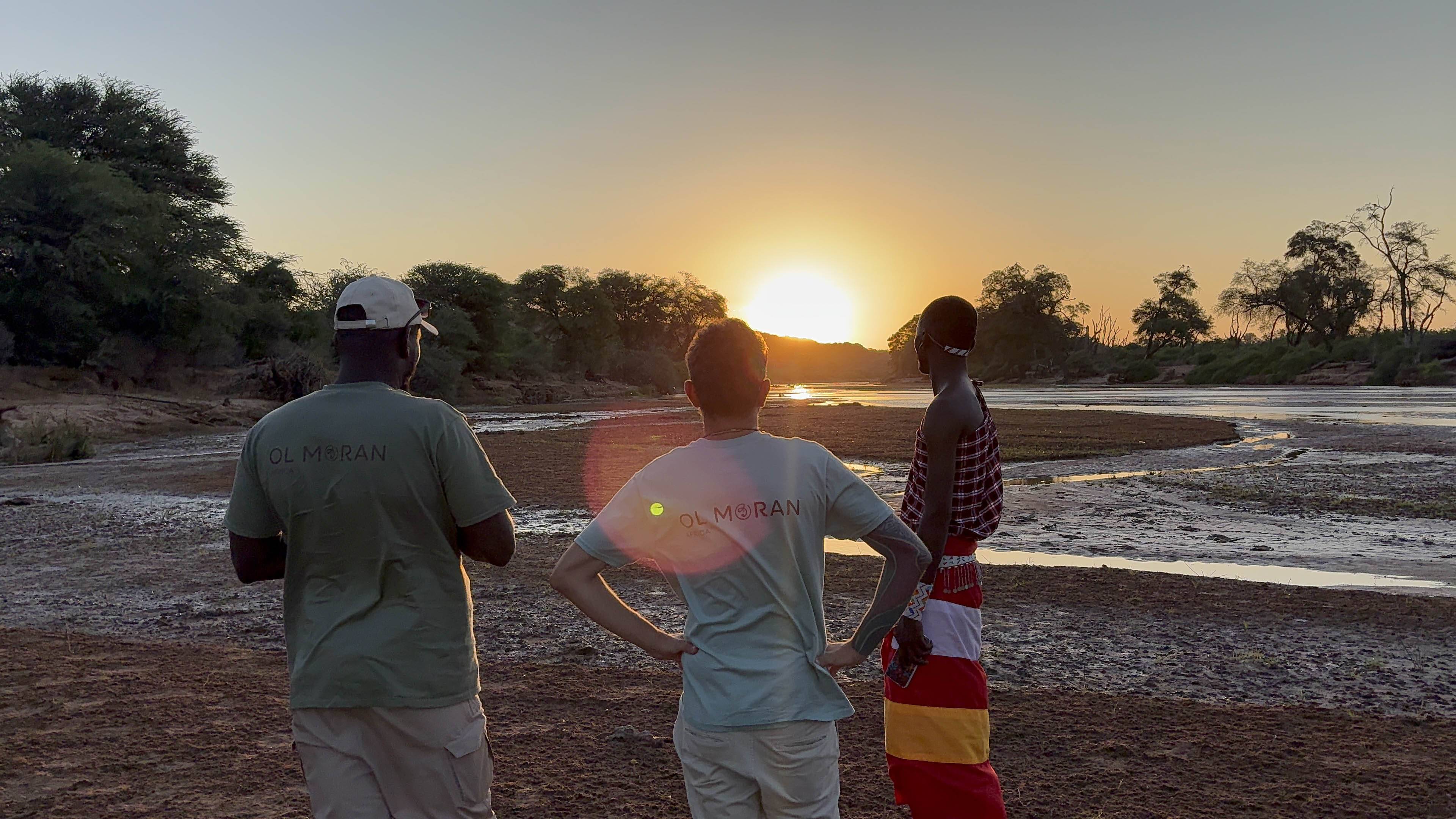
To redefine safari travel as a force that supports wildlife and the communities who protect it, built on deep, respectful connections.

